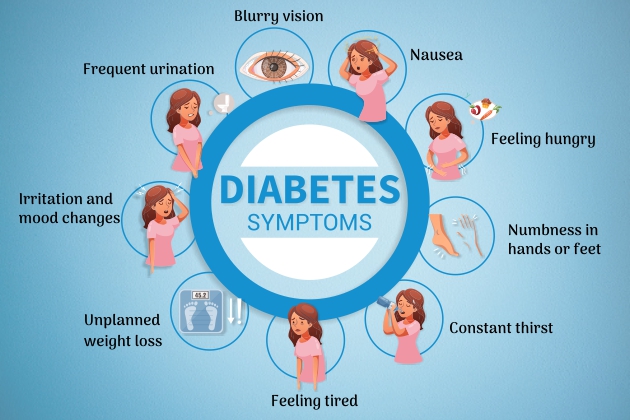
Diabetes Symptoms

Persistent tiredness because the body can't effectively use glucose for energy.
Diabetes is a chronic health condition that affects how your body turns food into energy. Normally, your body breaks down most of the food you eat into sugar (glucose) and releases it into your bloodstream. When your blood sugar goes up, it signals your pancreas to release insulin. Insulin acts as a key to let the blood sugar into your body’s cells for use as energy. If you have diabetes, your body either doesn’t make enough insulin or can’t use the insulin it makes as well as it should. When there isn’t enough insulin or cells stop responding to insulin, too much blood sugar stays in your bloodstream. Over time, that can cause serious health problems, such as heart disease, vision loss, and kidney disease. There are several types of diabetes, with Type 1, Type 2, and gestational diabetes being the most common.
Type 1 diabetes is an autoimmune condition where the body attacks insulin-producing cells in the pancreas, leading to a complete lack of insulin production. This type of diabetes typically develops in children and young adults, but it can occur at any age. On the other hand, Type 2 diabetes is the most common form and is largely preventable. It occurs when the body becomes resistant to insulin or when the pancreas is unable to produce enough insulin. Type 2 diabetes is often associated with obesity, physical inactivity, and poor diet, although genetics also play a role. Gestational diabetes develops during pregnancy and usually disappears after the baby is born, although it increases the mother's risk of developing Type 2 diabetes later in life. Regardless of the type, managing diabetes involves regular monitoring of blood sugar levels, a balanced diet, regular physical activity, and, in some cases, medication or insulin therapy to maintain optimal blood glucose levels.
Persistent tiredness because the body can't effectively use glucose for energy.